09 July 2009

The Enigmatic Parson Weems, Part the First


I have in my library a tome entitled A History of the Life and Death, Virtues and Exploits of General George Washington by one Rev. Mason Locke Weems, better known as "Parson" Weems. Surely you, oh enlightened Cabinet reader, are familiar with the story of the young Washington secretly designing to steal his uncle's cherry orchard and replant it along the nearby Potomac River tidal basin next to the giant, Egyptian Revival lightning rod he erected. When confronted, Georgie told his father that he "could not tell a lie." Astounded by the young lout's honesty, Wash. Sr. assured his boy that honesty, and a seven-year indenture, were sufficient payment for his errant hatcheting.


Although it is often thought today that Weems fabricated the tale to illustrate the morality of the new United States' greatest hero, the naked truth is that Washington suffered from a disease that, in addition to causing adolescent tooth loss, produced a chemical similar to sodium pentothal (a truth serum) and practically prevents one from lying. The story of one modern-day suffering is chronicled in a recent documentary that, I believe, enjoyed some great success.

But I digress. What's the "911" or "deal-i-o-izzle", as the kids say, on "Parson" Weems? Our Weems was a book seller by trade during the late eighteenth and early nineteenth centuries in the Eastern United States. There were so few books in those days (perhaps because most monographs and correspondence were tattooed on one's indentured and non-dentured servants) that Weems was driven to write his own in order to reap a greater profit. He would take his wagon, Roma-like, from town to town, hawking his written wares.

How did Weems gather so much information about GW and his other biographical subjects? Did he take a page from Boswell, constantly bothering Washington and wanting to hang out with him (see the entry on the "Encyclopedia" Britannica, part II), or did a spirit of some kind reveal it to him in a waking dream? The world may never know, but this distinguished academic will sure attempt to speculate on the matter in the second installment about Parson "Mason Locke" Weems!

24 May 2009

The Humble Century Plant


17th-century botanical print of a humble century plant.

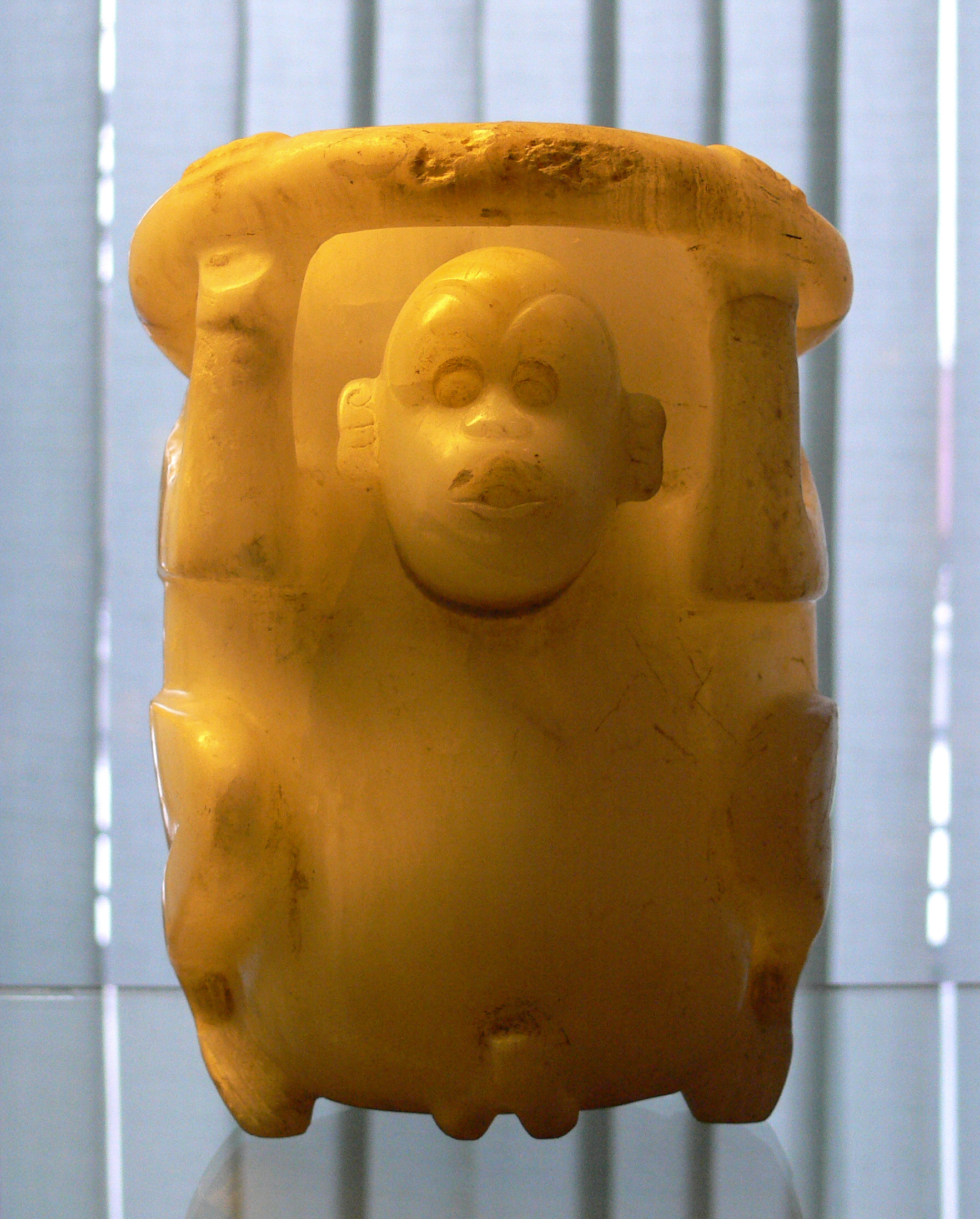
My apologies, dear readers, for being away. I'm afraid I was deep in the Mexican national archives at Tenochtitlan doing Important Research. While there, however, I stumbled upon an artifact for the Cabinet and an interesting tale for my Blog. You can see a photograph of it below. (BTW: Do not fear, friends. I did not contract H1N1, commonly known as the 'pig flu,' during my time south of the border.) 


Strange and unfathomable, is it not? I purchased it off of a blind man on the Plaza de la Constitucion. It is a jar for pulque from the Aztec period, circa 1200-1520 CE. It is in the form of a monkey and is made of onyx marble.

What is pulque, you ask?

Pulque is an alcoholic drink, made from the juice of the maguey. It is a traditional native beverage that is very popular today among la raza cósmica. The maguey is also the plant responsible for the strong liquors Mescal and Tequila, two reasons that don't remember the Spring Break vacation from my Prestigious Undergraduate Institution in '52! The maguey is commercially harvested across Mexico for the production of these alcholic beverages. Nice packaging, eh? I would down a six pack of pulque every afternoon during my three months in the archives. Who says deciphering sixteenth-century Castillian paleography can't be a hoot and a holler?


 A man being attacked by a sentient Century Plant. 
From Elizabeth Visere McGary's An American Girl in Mexico, 1904.


"Pulque! Get ya pulque here!" 
Photochrome print of a pulque store, Tacubaya, Guanajuato, Mexico, c. 1900.

The maguey plant, more commonly known as the "century plant," is a member of the agave family. Despite appearances, it is neither a type of cactus nor able to herbally treat minor burns. Here is a picture (artistic rendering) of the century plant: 


Whoa! Look at how ****ing tall that thing is! That gentleman/lady looks pretty impressed, too. They say everything's bigger in California, though, right?

Even though its name would lead one to believe that the century plant indeed lives for a century, I'm afraid that, just as with the Hundred Years' War (Guerre de Cent Ans), the name is rather inaccurate. Most century plants do not live as long as John Denver co-star George Burns but instead approximate the lifespan of Seattle musician and malcontent Kurt Cobain.


An agave in bloom in Austin, Texas.

It has gray-green leaves up to six feet long, with spiny edges and a large spike at the tip. (That's what she said.) The maguey flowers only once, producing a stalk with big yellow flowers reaching up to twenty-five feet in tall. The century plant dies after flowering. :(

There's two happy endings to this story, though. It produces suckers that grow into their own little magueys. And I'm stone drunk on pulque!!!! Woooohoooo!

Well, more from the Cabinet soon....perhaps about the century plant, or maybe about eighteenth century itinerant book peddlers. 

04 February 2009

The "Encyclopedia" Britannica, Part II

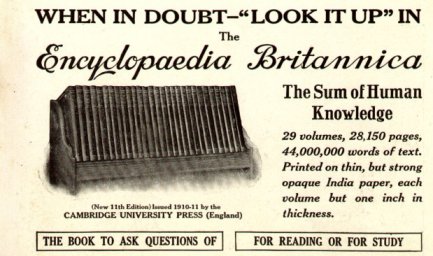
As promised, loyal readers, I have opened the Cabinet back up to tell the rest of my story about the Encyclopedia Britannica.


Let me first mention some of the article titles for the first edition of 1768, the subject of my merry ramble: Bleaching, Fluxions, Horsemanship, Midwifery, and Musick, to name but a few.


One of the founders of Brittanica in 1768 was Andrew Bell, a Scottish gent with a big nose who was four and half feet tall. An engraver of dog collars, Andy did the copperplates for the encyclopedia, many of which were, strangely enough, thin, circular pictures adorned with Scottish terriers.


One of Bell's engravings from the Encyclopedia, for the article "Male Beauty."

George III, King of England, was no fan of these terrier engravings and the Jacobite sympathies they stirred in the hearts of all true Scots. He personally tore out these engravings, in addition to the plates Bell had done of the female pelvis for the article "midwifery," from every copy of the 'pedia.


One man who WAS enamoured of Bell's engravings, and the Britannica itself, was the pretender to George's granddads' (George II's) throne, Bonnie Prince Charlie. Unrelated to the popular musician, Charles Edward Stuart was the Scottish Catholic (and rightful) claimant to the British crown. In 1745, the young Chuck led an invasion of England to restore himself to the crown. Thwarted, Chuck lived on until the 1780s, probably amusing himself with those titilating pelvic drawings.


Charles Stuart the Younger.  What a Bonnie Lad!

Finally, we turn to a man who was neither a king, pretender, engraver, Scot, or an encyclopedia, Samuel Johnson. (Although he would have enjoyed those pelvic copperplates as much as the next eighteenth-century man, I assure you, Sir!) Sam, apart from being an amateur sleuth with his Watson, James Boswell (who was a Scot-where did they all come from?!?) wrote the first classic dictionary in English, A Dictionary of the English Language in which the Words are Deduced from their Originals, and Illustrated in their Different Significations by Examples from the Best Writers to which are Prefixed a History of the Language and an English Grammar, by Samuel Johnson, A.M. in Two Volumes. Surprisingly, his dictionary was longer than that title, and many entries resembled short, biased encyclopedia entries.


Consider this one, for example:


"Biographer, n. - A crazy Scottish Kid who is always trying to get a much older, more mature Gentleman Author and Scholar to have Dinner with him and hang out with him all the Time so he can write down some anecdotal stuff about said Author and make a quick Pound off his Life Story."


Well, we have seem some of the interesting personalities behind, and associated with, the early days of the EB. Perhaps in a future installment of the Cabinet I will take up the later story of the Encyclopedia, including the wondrous and coincidental Eleventh Edition,  from 1911. But for now, I must return to my fireside and make some s'mores for dinner. How me loves them s'mores! Until next time, the Cabinet is closed.

01 January 2009

The "Encyclopedia" Britannica, Part 1


My great apologies for my absence. I have been occupied with matters of a pseudoacademic nature. More on that later.


I would like to relate a story to you that happened some weeks ago. As I spent a quiet New Year's Eve contemplating the vagaries of academicia, intelligentology, knowledgeophilia, and the like, I browsed through my collection of antiquated encyclopedias. After becoming unsatisfied with my 1983 edition of Funk and Wagnall's New Encyclopedia, I found in the Cabinet my long-forgotten copy of the first edition of the Encyclopedia Britannica. Published in 1768 in three volumes, it is, in my opinion, the definitive statement of Complete World (British) Knowledge. Actually, its full title is:


Encyclopaedia Britannica; or a Dictionary of Arts and Sciences, Compiled upon a New Plan, in which the Different Sciences and Arts are Digested into Distinct Treatises or Systoms; and the Various Technical Terms, etc., are Explained as They Occur in the Order of the Alpahbet, Illustrated with One Hundred and Sixty Copperplates, by a Society of Gentlemen in Scotland, in Three Volumes.


So catchy! Why don't they have titles like that anymore?


Piqued your curiosity (ha!), haven't I? Well, more is to follow, on such interesting topics as "Copperplates," "Samuel Johnson," "Bonnie Prince Charlie," and other fascinating minutia!

17 December 2008

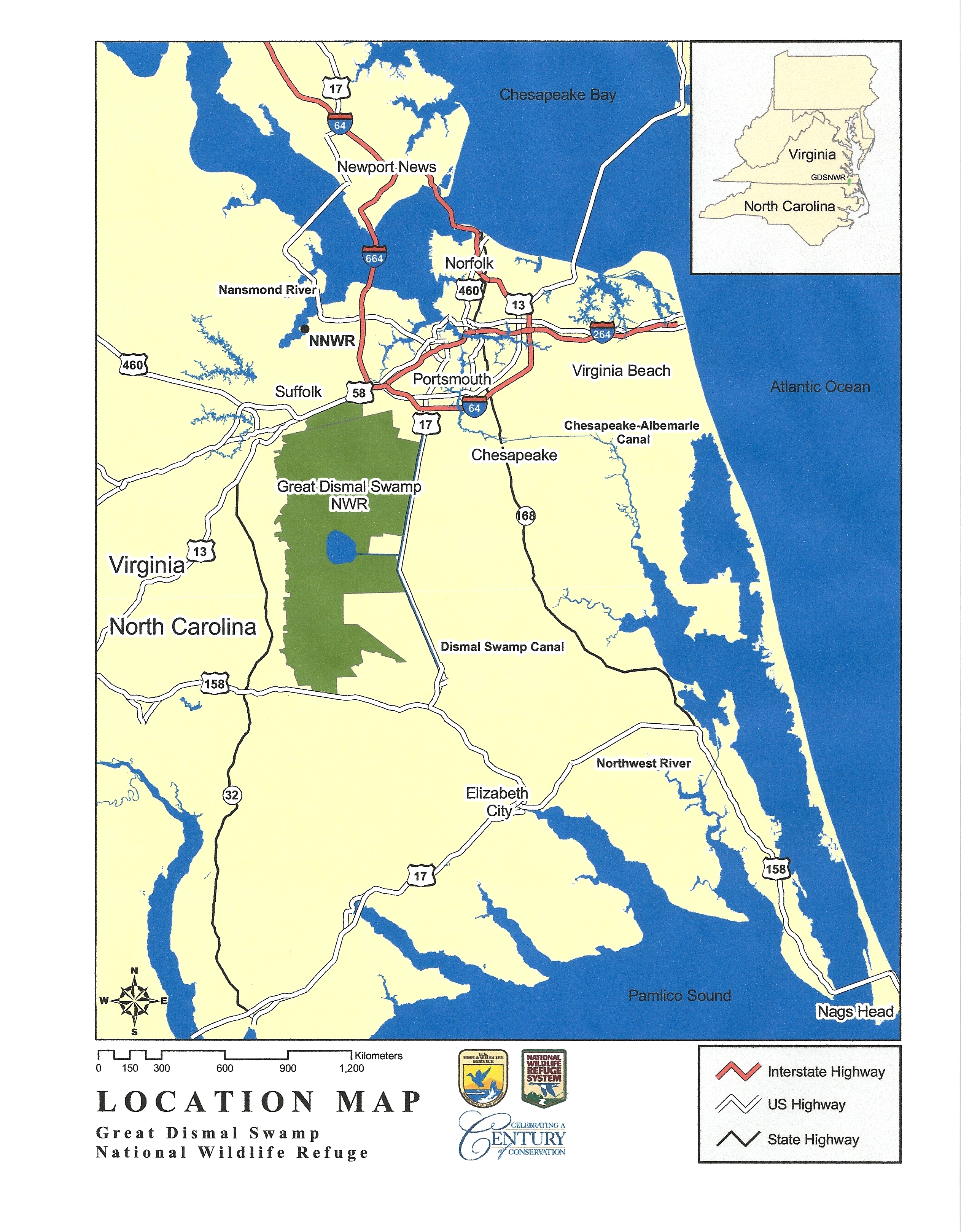
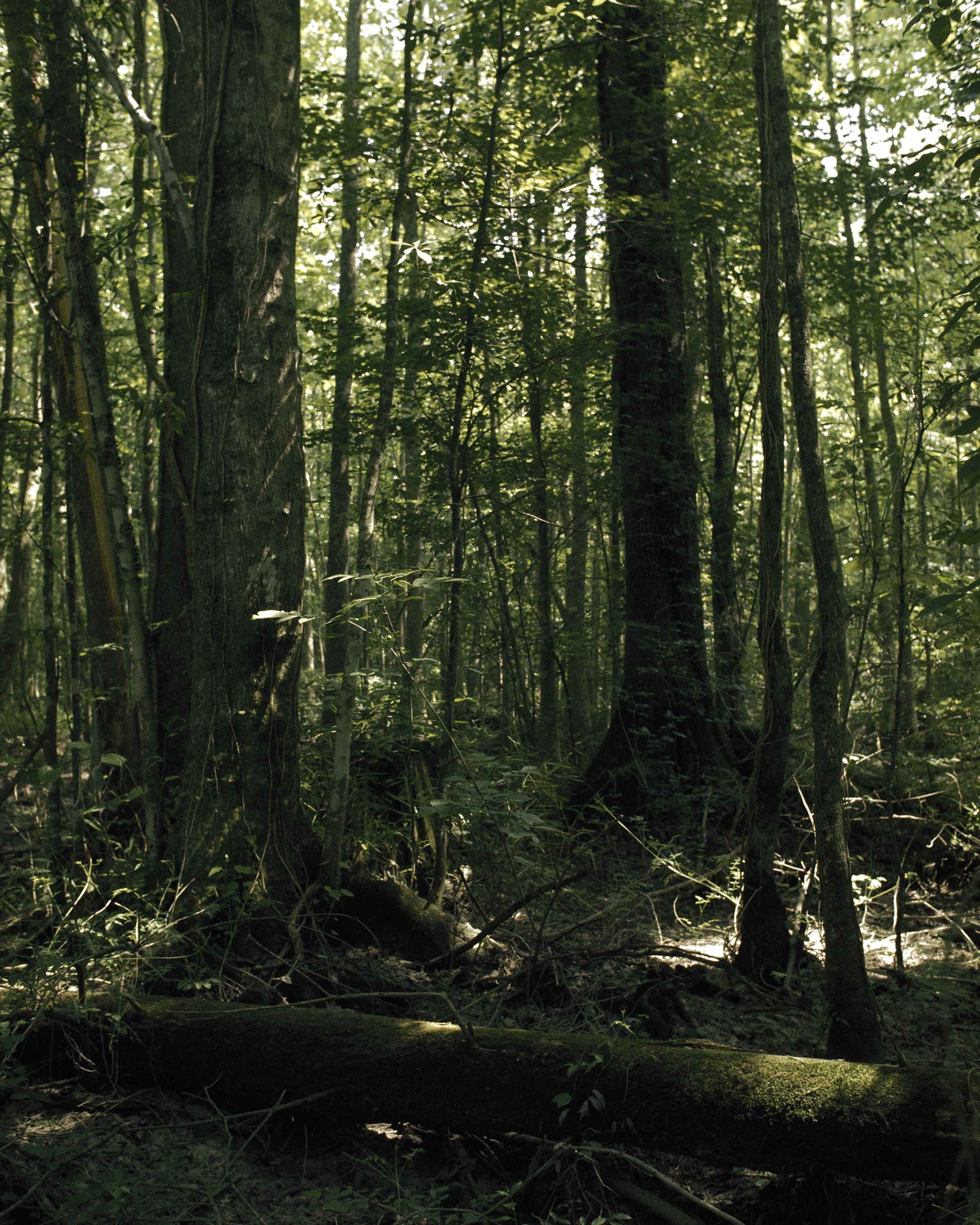
The Great Dismal Swamp, Part Deux: The Swamping


As I was saying...if you are curious about the History of the GREAT DISMAL, read on. But I must worn you, is not for the faint of heart!

No one is sure what (or whom) made the giant black water swamp. "Non-pseudoscientists," AKA "scientists," claim that the Dismal was created the continental shelf last shifted, thousands upon thousands of years ago, the true scholar knows that the Earth is only 6012 years old and that this "continental shelf" business cannot possibly be accurate.


Also under dispute is the genesis of Lake Drummond, the evil lake at the black heart of the swamp. (I mean, a swamp with a giant lake in it! Really!) Some claim that this murky pond was the result of a "peat burn" around four thousand years ago. But we all know that no Irish lived in America until the nineteenth century, when they pirated boats to invade our country with three specific goals: monopolize our menial jobs, steal our American potatoes, and fight in our Civil War.

The United States' constant friends, the Native Americans, have an even less convincing theory. They believe that a Firebird created the lake. Even if they aren't talking about the late, great Pontiac muscle car, friend of those weird guys that graduate high school and keep hanging around the parking lot, I can't really see how a bird made of flames could create a watery lake.

At any rate, the lake was not discovered until Englishman and non-Indian white guy William Drummond stumbled across it in 1665. Since the Native Americans living around the lake for "13,000" years hadn't noticed it, I don't think they have much room to theorize about its creation.

But let us move on. I promised to tell you about the sex-crazed colonial gentleman whose history is intertwined with the Dismal. Well, here he is:


Fancy, no? This dandy is none other than William Byrd II, of Westover Plantation, Virginia. Byrd led a surveying expedition of the border between North Carolina and the Old Dominion in 1728. He writes about the Dismal in his account of the trip, entitled The History of the Dividing Line Betwixt Virginia and North Carolina, a title whose brevity is not appreciated by modern, non-eighteenth-century readers. Byrd and his party felt that the GDS was completely devoid of life. Their definition of "life" obviously did not include: mammals, birds, fish, reptiles, amphibians, insects, and Native Americans. But maybe he was too busy thinking about groping his serving wenches and flourishing Mrs. Byrd on the billiard table to notice. It happens.

Then there's the George Washington Ditch, perhaps our country's greatest tribute to the Founding Father most dedicated to ruining nature.

In 1763, Washington, after personally negotiating a peace to the long war between the French and Indians, started the Dismal Swamp Land Company, Ltd.. A venture capitalist, GW used the elite team of trained beavers that he kept at his Mt. Vernon home and his giant axe (see above) to harvest hundreds of acres of virgin timber which he used, in part, to craft numerous sets of wooden teeth.


1867 map of the Dismal Swamp Canal

Our next tale involves Harriet Beecher-Stowe, the crazed author who, according to Abraham Lincoln, personally started the Civil War from her uncle's Connecticut cabin.


After inciting the entire nation with her first novel, HBS decided to write a book about fugitive slaves hiding out in the horrible Great Dismal. Although a great author, she was not a good speller, and Dred: A Tale of the Great Dismal Swamp (1856) captured neither the essence of the awful feeling Stowe felt when she first gazed upon the GDS nor the reading audience that Uncle Tom's Cabin enjoyed.


An escaped slave in the Great Dismal Swamp, 1856, from Harper's.

The final chapter in our tale brings us up to today. Although a great deal of what remains of the Swamp is now protected by the government, much of the adjacent land is owned by Erik Prince and his private miliatry company Blackwater Worldwide. Prince is descended from German royalty who fled to the area after Napoleon's abolition of the Holy Roman Empire in 1806 to become the Electors of the Great Dismal. 

These shadow rulers presided over a meager realm of escaped slaves, Native Americans, and Lutherans. Although they lost their sovereignty during the "roaring"1920s, the family, now called "Prince," retained its land holdings through the Great Depression. Erik, the family's heir, has made it his personal mission to restore his family's principality, setting up an elite private military operation in 1997. His special ops forces, unsightly creatures captured from the darkest interior of the swamp, coerce local landowners to sell their acreage for way more than it's worth with bags of money given to them by the U.S. government.


So, the greatest threat to the Dismal today is not deforestation through beaver armies, angry Indians, or bad writing by suicidal poets -- it is a disinherited German prince's army of Swamp Creatures! Now that's irony (Alanis-style)!

Well, I hope that you have been inspired by these tales of America's Favorite Interstate Tidewater Swamp. Until next time, the Curiosity Cabinet is closed.

16 December 2008

The Great Dismal Swamp, Part One


Several days ago, a rambling gentleman, a hobo, a tramp, a vagrant, a highwayman, a knight of the road, if you will, knocked on the door to my domicile. Always curious to learn news of the world, and generally amiable to homeless gentlemen, I opened my round door to him and invited him in for a peanut butter sandwich, according to the customs of his people.

After we sat for several hours in silence, the grizzled veteran of the hobo jungles eating his "sandwich" and the Distinguished Academician puzzling over this peculiar specimen of Americana, the bum, whom I shall call "Viscount Molesworth" (for obvious reasons), suddenly engaged me in a dialogue. Although it was difficult to comprehend his speech, what I took to be a pidgin of Okie slang, English, and Volapuk, I made out that he had recently been to the "great swamp" where, he claimed, "the criks (sic) run black" and a lake existed that was higher in elevation than the swamp surrounding it.
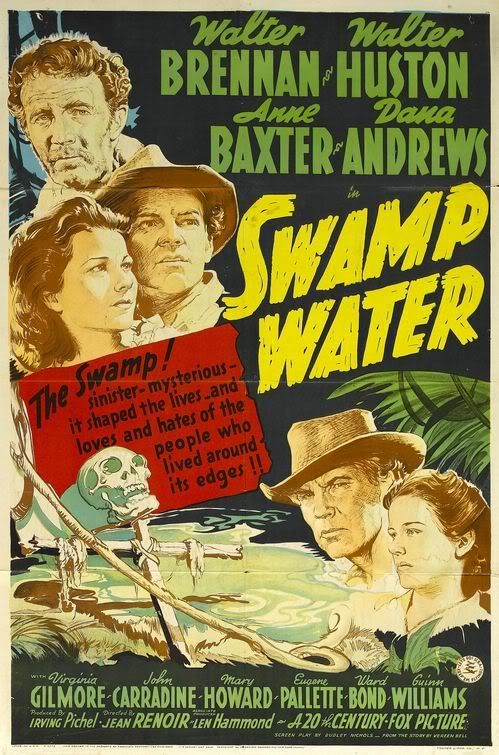
At first I dismissed these ramblings as the fever dream of a consumptive, but I then recalled an unlabeled jar of black water I had purchased from at an estate sale for Lesley Frost Ballantine, the daughter of poet and wall-building curmudgeon Robert Frost. The jar was advertised as having been a souvenir of a trip Frost took in his youth to the Great Dismal Swamp, a great malaria-ridden watery mystery on the border of North Carolina and Virginia after a feud with his high school sweetheart. I thought I even remembered a movie they made about Frost and the eccentric locals he met there:


Excited by this, and fed up with staring at the hobo and trying to deduce his painfully inflected sentences, I kicked said wanderer to the curb and investigated this strange natural phenomenon that attracted Tom Joads and adolescent literati alike. What I learned probably will not surprise you, especially if you are knowledgeable about Denture-Owning Founding Fathers, Colonial American Sex Addicts, Deciduous Conifers, Nineteenth-Century Women Abolitionist Novelists, and Enigmatic Private Military Companies. You are, you said? Well, I'm going to tell you about the GDS anyway.....in the next installment of the Curiosity Cabinet!

15 December 2008

The Jerusalem Artichoke: Or, the Poor Man's Sunflower


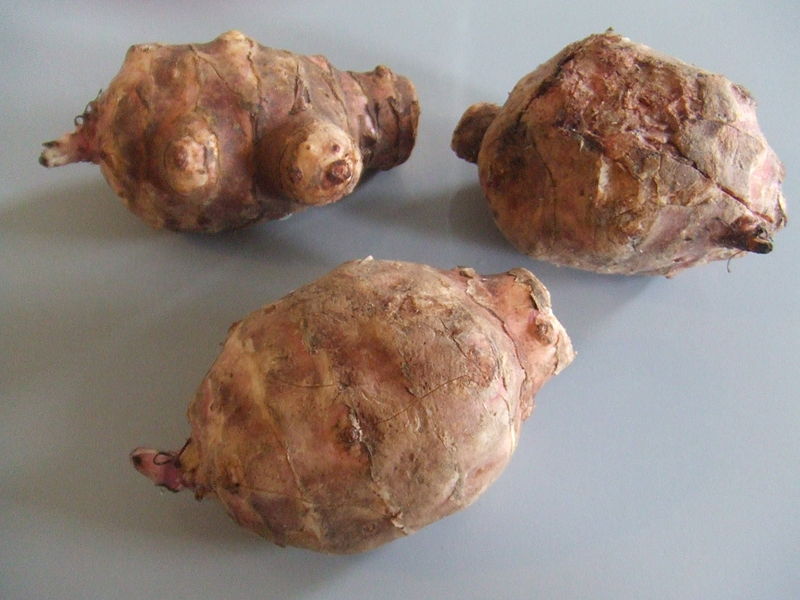
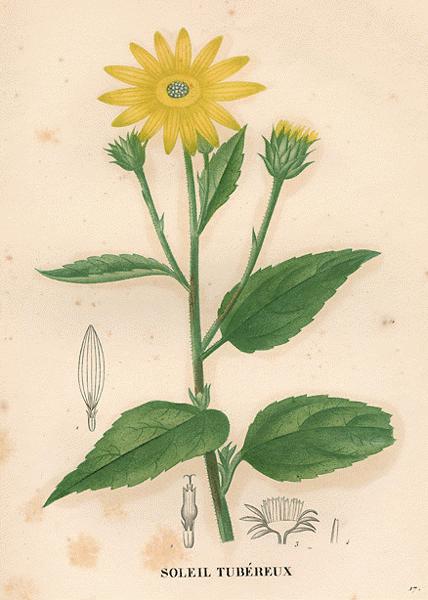
Let us consider the humble Jerusalem Artichoke (Helianthus tuberosus). I have recently added a new sample of this mysterious plant to my collection. Sulking in the shadow of its noble cousin the Sun Flower, the J. A. nevertheless is a plant of Merit, producing an edible root. Indeed, the plant is not even poisonous like its starchy great uncle the potato


Table tubers.

The J. A. was brought to the attention of Europeans as part of the Columbian Exchange. Wondrous new things were brought to the Old World, such as cocaine, coffee, and syphilis. The New World received mirrors, smallpox blankets, flat globes, and Europeans. A symbiotic swap if there ever was one!


Anyway, back to the Jerusalem Artichoke. How did it get its name, you might ask? (You probably wouldn't, hypothetically, but let's proceed with this thought experiment.) Although some "botantists," like that BabyBjorn wearing know-it-all Loren Rieseberg, might tell you that "Jerusalem" is a folk etymology, derived from the Italian world for sun flower, girasole, they would be wrong. As wrong as wearing a BabyBjorn in public.

Knowledgable Pseudobotanists, like myself, know that it is called Jerusalem because it was originally discovered by the Nephites, specifically their leader, Nephi, when they arrived in the New World in 589 BCE. Nephi named the plant after his hometown, because radiance of its brilliant yellow flowers reminded him of the gilded ark so familiar from the Temple. As for artichoke, well, it was just a PR move. Everyone knows that adding a super-trendy moniker really spiffs up a dismal product--Just ask Eric the Red. Nephi's Jerusalem Artichoke plantations didn't work out, though, probably, as the The Pearl of Great Price speculates, because he had Attention Deficit Disorder (ADD). And he started selling pearls for exorbant amounts of sheckles instead.

Claude Monet, 1880.

But what uses does it have, you ask? You can eat it, make liquor out of it, use it for fuel, and it makes a great doorstop. Some even believe it has healing powers, perhaps because of the J-town connection. Its most important role, though, is as a plant in garden catalogues, serving its useful purpose as something Pretentious Gardeners can order and use to impress their friends.


Well, that is about all for the "King of Neglected Tubers," the Jerusalem Artichoke. Join me next time, as I share further knowledge from the Curiosity Cabinet. In the meantime, I will be sitting by the fireplace, waiting for my ravens to return as I burn my collection of Magic Eye desk calenders.

Welcome to the Cabinet!


Hwaet!

I bid all welcome my humble "Blogge" post on subjects of a diverse, interesting, and (indeed) wondrous nature. My curiosity cabinet is a virtual room, not unlike those of old, exhibiting, for the willing participant, an encyclopedic collection of knowledge both tangible and intangible. This shall include, will not be limited to, history, natural sciences, and antiquities. Also, alchemy, astrology, pseudoscience ("real science" in the Greek), and matters of a metaphysical or speculative nature. And also some stuff that might be made up.

But a little about your humble author. I am a Distinguished Academician at an Institution of Higher Learning. From my panopticon at the top of my ivory tower, I send out my ravens to gather the news of the world each day. Although these birds cost me my depth perception, I cherish the TOTAL UNIVERSAL WISDOM they have allowed me to accumulate. And I read some books, too, I guess.

I will liken my cabinet of curiosities, or Wunderkammer ("Wonder Camera") in Deutsch ("German"), to a memory theater, a microcosm of the world, a Naturwissenschaftwundermicrokosmosgedächtnistheaterneugierkabinett, if you will.

Let us begin!

The Prof

Post-script: Make sure to follow my links if you desire to know more about a topic. That is, if you trust other sources on the Internet. Soon these links will not be necessary, however, because I hope to make this Cabinet a sort of Intra-net 'cyclopedia of a self-referential nature.

*     *     *

While you wait patiently for my next post from the Cabinet, 
enjoy these photos of my sanctum sanctorum:


Welcome to Professor Carmichael's Cabinet of Curiosites

Hwaet!

I bid all welcome my humble "Blogge" post on subjects of a diverse, interesting, and (indeed) wondrous nature. My curiosity cabinet is a virtual room, not unlike those of old, exhibiting, for the willing participant, an encyclopedic collection of knowledge both tangible and intangible. This shall include, will not be limited to, history, natural sciences, and antiquities. Also, alchemy, astrology, pseudoscience ("real science" in Greek), and matters of a metaphysical or speculative nature. And also some stuff that might be made up.


But a little about your humble author. I am a Distinguished Academician at an Institution of Higher Learning. From my panopticon at the top of my ivory tower, I send out my ravens to gather the news of the world each day. Although these birds cost me my depth perception, I cherish the COMPLETE WORLD KNOWLEDGE they have allowed me to accumulate. And I read some books, too, I guess.


I will liken my cabinet of curiosities, or Wunderkammer ("Wonder Camera") in Deutsch ("German"), to a memory theater, a microcosm of the world, a Naturwissenschaftwundermicrokosmosgedächtnistheaterneugierkabinett, if you will.


Let us begin!

Prof. Carmichael

Post-script: Make sure to follow my links if you desire to know more about a topic. That is, if you trust other sources on the Internet. Soon these links will not be necessary, however, because I hope to make this Cabinet a sort of Intra-net 'cyclopedia of a self-referential nature.


Related Posts Plugin for WordPress, Blogger...