17 September 2010

The Sussex Dragon and the Flying Serpent of Essex


Title Page and Illustration for True and Wonderfull...

"Nothing delights an English-Man's fancy so much as as new novelties [As opposed to old novelties? - Ed.]," wrote the anonymous sage behind the 1669 English pamphlet The Flying Serpent. As the author of a chronicle of Interesting Curiosities, I wholeheartedly agree. And what is more novel than wing'd serpents and dragons? 

In this installment of the Cabinet, I present the tales of two such pernicious banes to the English villager, the Sussex Dragon and the Winged Serpent of Essex. These malefic creatures were described in two printed pamphlets, periodicals much in the spirit of the modern Daily Mail of London or New York Post (sorry, New York Post).

The first of our treatises, published in London in 1614, is called (by now, you know my fondness for early modern titles):

True and Wonderfull. A Discourse relating a strange and monstrous Serpent (or Dragon) lately discovered, and yet living, to the great annoyance and divers slaughters both of Men and Cattell, by his strong and violent poyson. In Sussex, two miles from Horsam, in a Woode called St. Leonards Forrest, and thirtie miles from London, this present month of August, 1614. With the true Generation of Serpents.

The Sussex Dragon lived "in a vast and unfrequented place, heathy, vaulty, full of unwholesome shades, and over-grown hollows, where this serpent is thought to be bred." Ye gods! say I. Furthermore, "This serpent (or dragon, as some call it)" was "nine feet, or rather more, in length, and shaped almost in the form of an axle of a cart." 

Nice, real descriptive--the axle of a cart? What? According to eyewitnesses, the serpent was"of Countenance very proud." At the sight of men or cattle, it was said, he would "raise his neck upright, and seem to listen and look about, with great arrogancy." No wallflower, then, our dragon.


Okay, so this is NOT from the seventeenth century or from England, but it's really colorful and awesome. By Ivan Yakovlevich Bilibin, early twentieth century. 

In case you thought that all of this sounded a little dubious, the author lists several eyewitnesses. (Although one, fishily, has no name.): 
These persons, whose names are hereunder printed, have seen this serpent, beside divers others, as the carrier of Horsam, who lieth at the White Horse in Southwarke, and who can certify the truth of all that has been here related: John Steele; Christopher Holder; A Widow Woman dwelling near Faygate.
There is no mention of whether anyone ever caught the Sussex Dragon, but my hunch is that his descendants still roam free on the southern coast of England.

The Dragon had a long legacy in Sussex. The following is an extract from a mid-seventeenth-century song popular in the area:
I should howl outright to tell of the rest, 
How this poor a maid was over prest;
Therefore quickly come, and read for your penny.
Come, my hearts. 'tis as good a bargain as e're you had any.
Here's no Sussex Serpent to fright you here in my Bundle,
Nor was it ever printed for the Widow Trundle [The infamous 'A Widow Woman'?]
*    *    * 

The second of our fire-breathing friends, is the "Flying Serpent of Essex," which terrorized southeastern English villages in the 1660s, perhaps summoned by vengeful Puritans and Roundheads. A similarly alarmist pamphlet about the beast was published in London in 1669, called:

The Flying Serpent, or, Strange News out of Essex, Being a true Relation of a Monstrous Serpent which hath divers times been seen at a Parish called Henham on the Mount within four Miles of Saffron-Walden: Showing the length, proportion and bigness of the Serpent, the place where it commonly lurks, and what means hath been used to kill it. Also a discourse of other Serpents, and particularly of a Cockatrice killed at Saffron-Walden


Illustration from The Flying Serpent

No stranger to unnecessary versification, the pamphleteer introduces the serpent thus:

Which with a hissing from his Den appears
Amazing both at once the Eyes and ears,
Fire from his threat'ning eyes like lighting shot
And Stygian [hellish] blasts exhaled from his dire throat.
His "fully proportion" was "8 or 9 foot long, the smallest part of him about the bigness of a Man's Leg." His eyes were "very large and piercing" and "in his mouth he had two row of Teeth...very White and sharp." He had wings "indifferent large" that were "too weak to carry such an unwieldy body."


The author advises that "Serpents in this Kingdom are no new thing, and far more monstrous and prodigious than this" have been seen, though "this be the greatest that we have heard of in this latter age."


A brave Essex villager slaying the Winged Serpent, with the help of an anchor and an uprooted weed. Or, the coat of arms of Heide, Germany. You decide.


Our pamphleteer ends with a postscript: "I am informed by the Neighbors thereabout, that they intend to keep a constant Watch upon it, till such time as they hope to kill it." Round up the posse, I say.

Well, I hope that you, fair reader, have enjoyed our excursion into the world of seventeenth-century English serpent and dragon pamphlets. Until next time, this is your loyal Cabineteer signing off.

08 September 2010

The Old, Old, Very Old Man


Fig. 1: "Old Tom Parr," from the National Portrait Gallery, London

My apologies for my long absence. I undertook a complicated yet necessary re-cataloging of the Cabinet that temporarily shut down my Ethernet. But no matter - I am back, with a story for the ages!

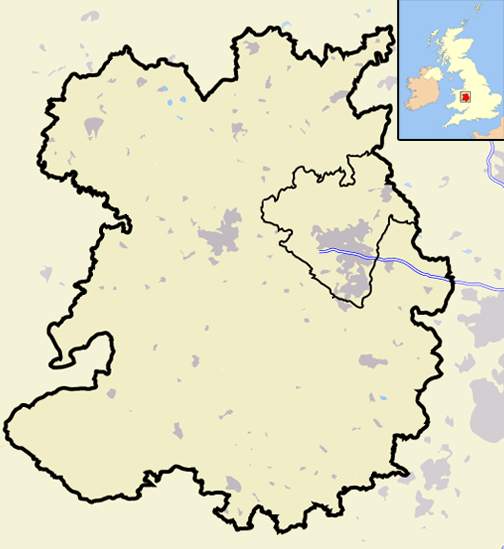
As promised, I bring you a full-length edition of the Cabinet on Thomas Parr, who I first tracked down in the antique folio The New Wonderful Museum, etc. The Lives of Great and Celebrated Characters of All Ages and Countries (1860) observed that Parr was "one of the oldest post-diluvians, of whom we have any authentic account." Although no Methuselah or even a Lamech, Parr was reputed to have lived 152 years, from 1483 to 1635, his lifespan allegedly encompassing the reign of ten English kings and queens.* It was royal courtier and decidedly not round-headed Sir Thomas Howard brought Parr to London from his native Shrewsbury, Shropshire (currently home to ex-prime minister patriarch Leo Blair, Sr.!).


Fig. 2: Supercentenarian seeker Sir Thomas Howard, 1st Earl of Norfolk, 21st Earl of Arundel, 4th Earl of Surrey, 17th Baron Segrave, 16th Baron Mowbray, and 11th Baron Maltravers (1526? – 1646)

Parr quickly became a celebrity among the London glitterati and had his likeness painted by royal portraitists Peter Paul Rubens and Anthony Van Dyck. He entertained his audiences with tales of how he had not married until he had aged fourscore years. 


Fig. 3: The equally eccentric bard and boatman John "The Water Poet" Taylor composed a lengthy poetic ode to Parr, called "The Old, Old, Very Old Man" with a suitable prose preface.

Here is a favorite extract from Taylor's poem:

So this Old Man, his limbs their strength have left,
His teeth all gone (but one), his sight bereft,
His sinews shrunk, his blood most chill and cold,
Small solace, Imperfections manifold:

Yet still his sprits possess his mortal Trunk;

Nor are his senses in his ruins shrunk,
But that his Hearing's quick, his stomach good,
He'll feed well, sleep well, well digest his food.

He will speak heartily, laugh, and be merry;
Drink Ale, and now and then a cup a Sherry;
Loves Company, and Understanding talk,
And (on both sides held up) will sometimes walk.

And though old Age his face with wrinkles fill,
He hath been handsome, and is comely still,
Well fac'd; and though his Beard not oft corrected,
Yet neat it grows, not like a Beard neglected;

From head to heel, his body hath all over,
A Quick-set, Thick-set nat'ral hairy cover.
And thus (as my dull weak Invention can)
I have Anatomiz'd this poor Old Man.


Fig. 4: Parr reportedly slept 22 hours a day to ration his remaining life-force. Portrait attributed to Rubens, 1635.

Much as in the case of exceptionally old people from the Andes or Caucuses, perhaps the rarefied air of the Clee Hills of Shropshire** was responsible in part for Parr's alleged longevity. Like Pocahontas Rolfe, once in the hellish cesspool of bad air that was seventeenth-century London, Old Tom soon succumbed to illness. Perhaps dropsy, the gripe, consumption, gout, or a POISONED bowl of cherries with milk.

Fig. 7: Parr hanging out with his comely young wife and two dead infant children. From The Book of Wonderful Characters.

On the order of the king, Parr was buried in the illustrious confines of Westminster Abbey, alongside the likes of Newton, Darwin, and Chaucer (but not his beheaded patron, Charles I!). An autopsy was done soon after his death, and modern physicians reckon that, based on the postmortem, Parr likely was only around seventy years old, unfortunately. But three score years and ten was still a pretty respectable age in a time when people died from getting rained on and were pressed to death.


Fig. 5: Parr wearing his patented*** 'Age-Defying Helmet' From The Old Book Collector's Miscellany, 1873.

Despite his highly questionable longevity, Parr's cultural afterlife has been surprisingly vigorous, particularly for a man whose sole claim to fame was his great age. In addition to appearing in such nineteenth-century classic compilations as The New Wonderful Museum and The Lives of Great and Celebrated Characters, a recent film (2006) was made about his life, taking its name from The Water Poet's versified celebration. Also, a scotch whisky, named Old Parr, is named after the venerable geriatic.


Fig. 6: Long-life elixir.

So, in the words of The Water Poet, "I lay down the pen, leaving it to whomsoever can, or will, make more of this old man than I have done." See you next time, same Cabinet time, same Cabinet channel!
___________________________________________

* Edward IV, Edward V, Richard III, Henry VII, Henry VIII, Edward VI, Mary I, Elizabeth I, James I, and Charles I, although, in my opinion, the first three shouldn't really count, since their reigns add up to only 2 of the 152 years of Parr's life (1/76th).

** Many well over 1,500 feet!

*** Joke's on you. There weren't patents back then!

12 August 2010

Short World Leaders


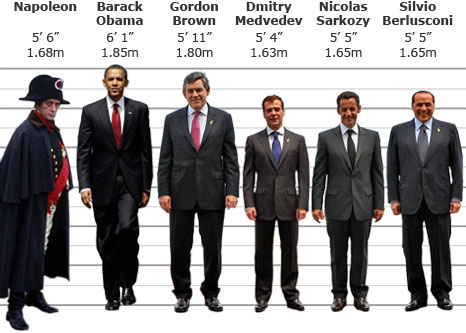
The Lineup (Photo courtesy of the Beeb)


I have recently noticed, in my daily scouring of sundry news-sheets and gazettes, the current dearth of tall world leaders, in the tradition of political giants George Washington (6'2"), Peter the Great (6'7"), Abraham Lincoln (6'4"), Charles de Gaulle (6'5"), and Henry VIII (6'2"). Many of today's heads of state tower far below the height reached by Napoleon Bonaparte (5'6") in an age when the average Frenchman was 5'5"!

So, what gives? Let me present the evidence; it is up to you, dear reader, to determine whether this pint-sized trend is merely an aberration or the result of an Yalie-Freemason cabal.


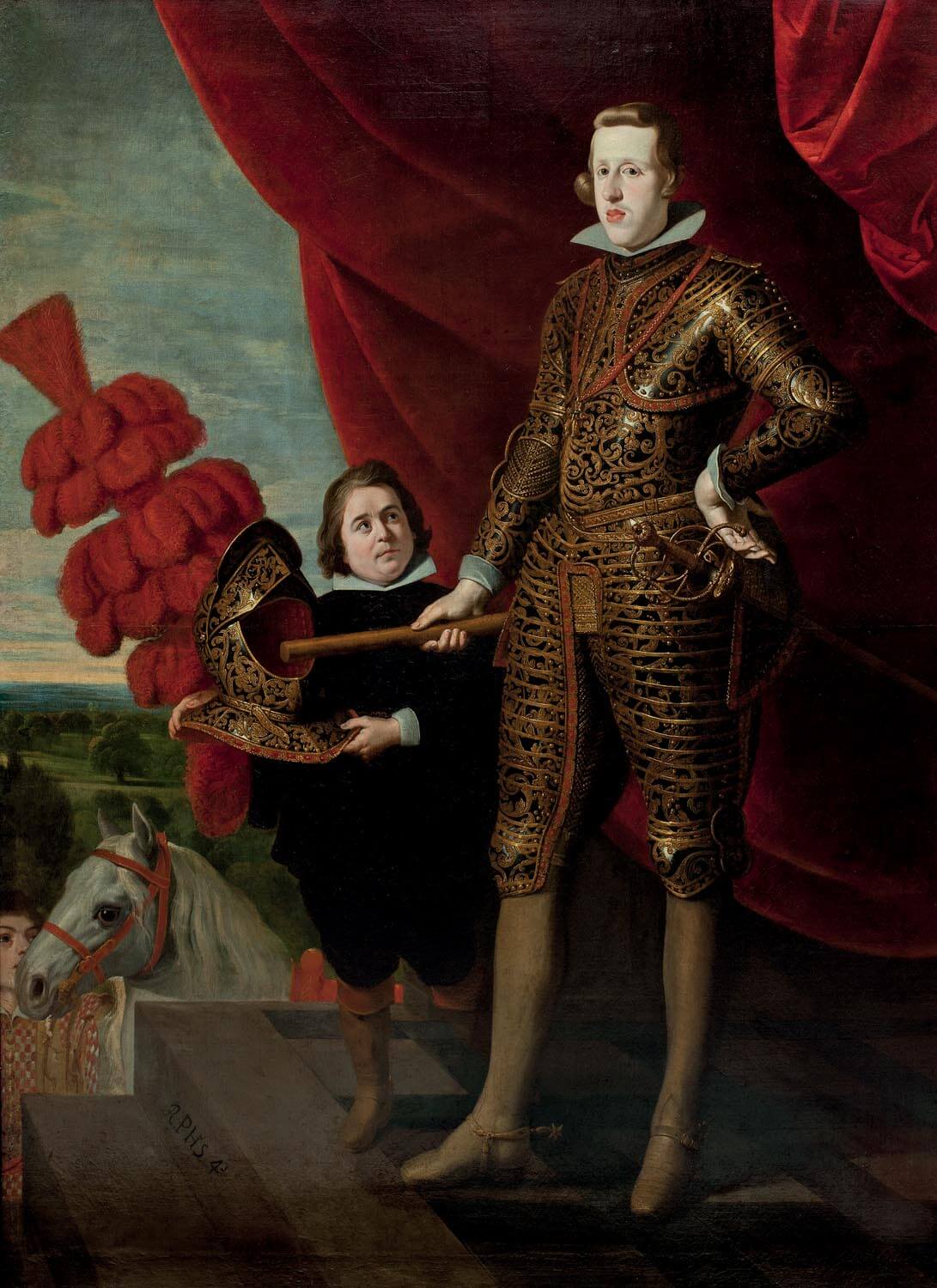
Vanished Titans: Seventeenth-century king Philip IV of Spain, standing next to his head minister, the Count-Duke of Olivares (painting by Velazquez). Though beset by the traditional bane of the Hapsburgs, the lantern jaw, Philip grew so rapidly in his youth that the ceilings of his private quarters in the Royal Palace of Madrid had to be raised three times between 1615 and 1625.

I have divided these short world leaders into several categories based on their height, and, correspondingly, their willingness to collude with one another to keep politicians with measurements more representative of the national everyman (and -woman) away from high office.

The European Community: The 5'5" Gang

Angela Merkel, Chancellor of Germany (avg. height: 5'5")

Nicolas Sarkozy, President of France (avg. height: 5'9")

Silvio Berlusconi, Prime Minister of Italy (avg. height: 5'9")


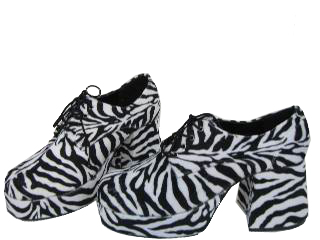
Former President of the United States George W. Bush (5'11") normally would tower over French President Nicolas Sarkozy (5'5"), who is here wearing platform shoes with 6-inch heels (these?) to disguise his horrible shortness.


The Napoleon Complex: Shorter than my Grandma

Dmitri Medvedev, President of Russia: 5'2" (avg.: ?'?")

Kim Jong-il, Absolute Monarch of North Korea: 5'3" (avg.: 5'8" in S. Korea)

Mahmoud Ahmadenijad, President of Iran: 5"3" (avg: 5'7")

Robert Mugabe, President of Zimbabwe: 5"3" (avg.: ?'?")


Pint-sized Zimbabwean leader Robert Mugabe, whose distrust and fear of his lankier ministers and political rivals might be partially responsible for his secretive and autocratic nature.


Some Other Kind of Short Dudes: Shortocrats

Vladimir Putin, Prime Minister of Russia: 5'7" (avg.: ?'?")

Hu Jintao, President of China: 5'8" (avg.: 5'8")


Here Bush meets with former Russian president and only moderately short leader Vlad Putin. Sadly, the giant current U.S. president Barack Obama (6'1") refused to meet with his Russian peer, Dmitri Medvedev (5'2"), because of their comically enormous difference in stature.


Political Giants: The Six-Foot Society

Barack Obama, President of the United States: 6'1" (avg.: 5'10")

David Cameron, Prime Minister of Great Britain: 6'0" (avg.: 5'9")

Steven Harper, Prime Minister of Canada: 6'2" (avg.: 5'9")

Benjamin Netanyahu, Prime Minister of Israel: 6'0" (avg.: 5'9")


Well, I hope that you have enjoyed this installment of the Cabinet. I will see you on the radio (not really, but I wish I had a show on BBC Radio 4).

Good morrow!

23 July 2010

The Wisdom of Samuel Johnson


Plate I: Dr. Samuel "Pomposo" Johnson, the "Tenth Muse, Lately Sprung From Lichfield"


"Few things are so liberally bestowed, or squandered with so little effect, as good advice."

So said the great eighteenth-century biographed Brit Samuel Johnson (1709-84). Yet that same bewigged mountain of a dictionarian bestowed a liberal portion of his own helpful advice and apt aphorisms on his fellow Englishmen. His nagging sidekick-scribe, James Boswell, played Johnson's Plato, recorded much of the man's wisdom in his famed biography, The Life of Samuel Johnson, DD.S. In fact, Johnson's prolific quoting made him the third most-quoted source (after those twin pillars of English Civilization, Shakespeare and the King James Bible) in Bartlett's [Not Very Familiar to the Average Reader] QuotationsSo, without further adieu, I present, for you to use at opportune moments within your social circle, a selection of the wisdom of the temperamental Doctor.


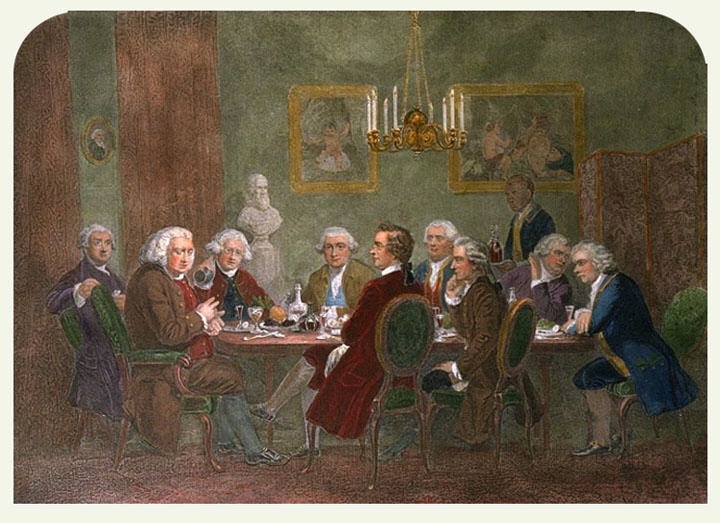
Plate II: All of London society came out to see the spectacle of Johnson's fortnightly quote-offs, in which the Doctor would invite all challengers to engage him in an "aphoristic Duel."


On Christopher Columbus, Genocider:
"The age being now past of vagrant excursion and fortuitous hostility, he was under the necessity of travelling from court to court, scorned and repulsed as a wild projector, an idle promiser of kingdoms in the clouds; nor has any part of the world yet had reason to rejoice that he found, at last, reception and employment."

On cucumbers:
"It has been a common saying of physicians in England, that a cucumber should be well sliced, and dressed with pepper and vinegar, and then thrown out, as good for nothing."


Plate III: At one of Sir Joshua Reynolds' famous soirees, during which Johnson was known to spout witty sayings randomly, now thought to be a symptom of his possible Tourette Syndrome.


On (Internet?) news:
"To us, who are regaled every morning and evening with intelligence, and are supplied from day to day with materials for conversation, it is difficult to conceive how man can consist without his news, or to what entertainment companies can assemble, in those wide regions of the earth that have neither Chronicles nor Magazines, neither Gazettes nor Advertisers, neither Journals nor Evening-Posts."

On sex:
Boswell: "So then, Sir, you would allow of no irregular intercourse whatever between the sexes?"

Johnson: "To be sure I would not, Sir. I would punish it much more than is done, and so restrain it. In all countries there has been fornication, as in all countries there has been theft; but there may be more or less of the one, as well as the other, in proportion to the force of law. All men will naturally commit fornication, as all men will naturally steal. And, Sir, it is very absurd to argue, as has been often done, that prostitutes are necessary to prevent the violent effects of appetite from violating the decent order of life; nay, should be permitted, in order to preserve the chastity of our wives and daughters."


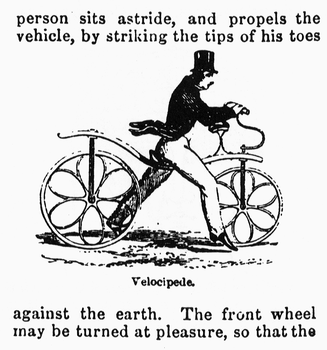
Plate IV: Johnson, despite severe farsightedness, refused to adopt spectacles, saying that a man of character needs glasses like a "fish needs a velocipede."

On smoking:
"Smoking has gone out. To be sure, it is a shocking thing, blowing smoke out of our mouths into other people's mouths, eyes, and noses, and having the same thing done to us. Yet I cannot account, why a thing which requires so little exertion, and yet preserves the mind from total vacuity, should have gone out."

On taverns:
"As soon as I enter the door of a tavern, I experience an oblivion of care, and a freedom from solicitude. When I am seated, I find the master courteous, and the servants obsequious to my call; anxious to know and ready to supply my wants. Wine there exhilarates my spirits, and prompts me to free conversation and an interchange of discourse with those whom I most love. I dogmatise and am contradicted, and in this conflict of opinion and sentiments I find delight."


Plate V: A man of many eccentricities, Johnson always held his hand in a permanent wave of greeting when walking in publick.

On women preaching:
"Sir, a woman's preaching is like a dog's walking on his hind legs. It is not done well; but you are surprised to find it done at all."

And, finally, on exercise:
"Exercise! I never heard that he used any. He might, for aught I know, walk to the alehouse; but I believe he was always carried home again."

Plate VI: Johnson wrote much of his celebrated Dictionary at several poorly-constructed desks in his London house.

Everyone here at the Cabinet (me) hopes that you enjoy these Grade-A aphorisms and use them liberally in the presence of your cohort. Remember, no one is as popular as the tweedy dude in the corner spouting arcane quotes. As Johnson probably did not say, "the road to Hell is paved with good intentions."

17 July 2010

The New Wonderful Museum, and Extraordinary Magazine


Your Humble Author, mining the libraries of the world for forgotten antiquarian baubles of knowledge. 

I recently came across a curious curio of a book on that great treasure trove of copyright-free media, Google Books, called:

The New Wonderful Museum, and Extraordinary Magazine: Being a complete repository of all the wonders, curiosities, and rarities of nature and art, from the beginning of the world to the present year 1802, comprehending a valuable collection (all well attested, and from respectable authorities) of Authentic and entertaining Descriptions, and Copper-plate Representations, of the most Wonderful, Remarkable, and Surprifmg Volcanos, Cataracts, Craters, Waterfalls, Whirlpools, and other Stupendous Phenomena of the Earth, resulting from Earthquakes and the general Deluge; strange Customs, peculiar Manners of remote Countries, wonderful Occurrences, singular Events, heroic Adventures, Absurd Characters, remarkable for eating, drinking, sailing, walking, etc., memorable Exploits, amazing Deliverances from Death and various other Dangers, strange Accidents, extraordinary Memoirs, astonishing Revolutions, etc., Including, among the greatest variety of other valuable matter in this line of literature (from an illustrated edition of the Rev. Mr. James Granger's celebrated Biographical history) memoirs and portraits of the most singular and remarkable Persons of both Sexes, in every Walk of human Life, from Egbert the Great to the Present Time, Consisting of many very eccentric Characters famous for long Life, Courage, Cowardice, extraordinary Strength, Avarice, astonishing Fortune, as well as genuine Narrations of Giants, Dwarfs, Misers, Impostors; singular Events, Heroic Adventures, Absurd and Vices and Virtues; uncommon Eclipses, Storms, remarkable Providences, heroic Achievements, supernatural Occurrences, strange Discoveries of long-concealed Murders, etc., etc., Forming altogether a New and Complete History of the Extraordinaries and Wonders of the World, the whole selected from the most approved and celebrated Historians, Voyagers, Travellers, Philosophers, Physicians and other eminent and distinguished Persons of every Age and Country, and from the most expensive Works and Manuscripts.


Written by a certain William Granger, Esquire, about whom little is known, the book, first published in 1802 in multiple volumes, is a kind of Ripley's Believe-It-Or-Not meets natural history meets Daily Mail-style tabloid meets--you guessed it-- a curiosity cabinet. Below I will share with you some of the terrific illustrations from the book with brief (and not embellished!) descriptions from the same.

I begin with John "Blind Jack of Knaresborough" Metcalf, the blind surveyor of highways in Derbyshire, etc., a man of advanced years still plying his trade when The New Wonderful Museum was published. The author assures us that he was responsible for surveying most of the highways and sundry roads in his corner of England, despite his visual disability. But, hey, couldn't anyone be a surveyor back then? I mean, that syphilitic ignoramus George Washington made it his stock-in-trade, right?


Next we have John "That Incorrigible Turkophile" Kelsey, a man of Restoration-era (1660-1688) England, who tried to convert the Ottoman sultan to Anglicanism! Only speaking English, Kelsey attracted much attention as a curiosity to the residents of erstwhile-Constantinople before spending six months (SEVEN by the Islamic lunar calendar) in a "madhouse." Fortunately, a guard there recognized his Pentecostal language as English. Kelsey was sent back to fair Albion on a ship, but he escaped and reappeared in the capital of the Turkish empire, later establishing a coffeehouse in the city called The Englishman's Head.


Then there is the curious example of Old Thomas Parr, a 152-year-old dude who is so interesting that I will pass over him now to devote an ENTIRE FUTURE POST to his story.


Mal (or Moll) Cut Purse, the stage name of Mary Frith, an infamous criminal of seventeenth-century London. Mal/Moll was of a "very masculine spirit and make...commonly supposed to have been an hermaphrodite." Her many discretions included acting as a "prostitute and procuress, a fortune-teller, a pick-pocket, a thief, and a receiver of stolen goods." In her illicit activities, she enlisted the help of her menagerie of gonofs, pictured above, including a monkey, lion cub, and a murder of crows.


Daniel "The Remarkable Miser" Danser, Esq., "who died in a Sack, and is a most Remarkable Example of UNACCOUNTABLE AVARICE." A wealthy penny-pincher in rural England, Danser scrimped and saved, wearing the meanest clothes and subsisting on the most meager allowances. He had a low opinion of many professions, feeling that "bellows-makers, undertakers, and trunk-makers are very extravagant fellows, on account of their great waste of nails, which profusion he thought unnecessary." He was found during his terminal illness wearing "an old sack, without even a shirt, remonstrated against the impropriety of such a situation," because, "having come into the world without a shirt, he was determined to go out of it in the same manner." After he had died, his executors found money hidden all over his estate, including:

£500 in an old coat in his barn
£2500 in a manure-heap
£200 in the chimney
£600 in a teapot (one Pound Sterling in 1800 would be worth at least $25,000 in today's money)

*     *     *

Those are all the stories I have time to share right now. But perhaps I will continue these tales in a future post, where we will learn the histories of the "Fake Czar," the "Bird Hermit," and the "Runaway Bridegroom"!

06 July 2010

Rotten Boroughs


In the spirit of the current confused governing situation in Ye Olde Unitede Kingedome, I bring you, faithful readers, the history of the ROTTEN BOROUGH, a (sadly) defunct peculiarity of the English political system. These parliamentary constituencies were those that had, over the centuries, lost enough population to make their voters greatly over-represented.  Most were either bought in secret backbench deals in Parliament, passed from aristocratic father to dandified son, or lost in spirited, sandwich-inspiring games of the card game whist.

1.1: Old Sarum, the famous modern Stonehenge city of the Salisbury plain, at its (projected) height

Perhaps the most (in)famous of the rotten boroughs was Old Sarum, once the proposed site for a cathedral city that was later moved to Sailsbury (New Sarum). [Ed.: If they already had a New Sarum, why did they even need its Old namesake?] In 1831, the parliamentary district of Old Sarum held two seats in the House of Commons but only eleven registered voters, all absentee landowners. It had been this way for almost two hundred years, since the seventeenth century. Before every election, it was said, the Eleven met inside the ruins of the cathedral for a fortnight to determine, through a gamut of secret rituals, who the Chosen Members of Parliament would be. Reformers accused them of engaging in augury, drawing lots, professing of secrets, and ancestor worship, among other black and white magic, during these sessions.


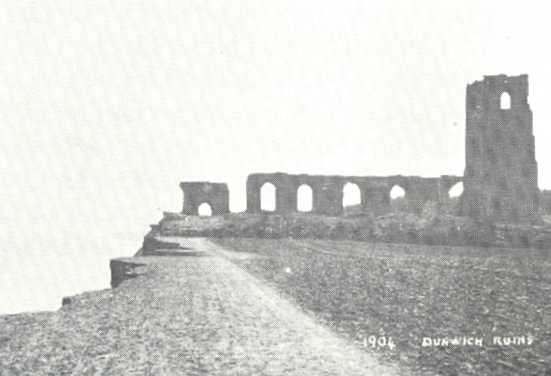
1.2: The notorious 'half church of Dunwich', All Saints Anglican Church, as it appeared in 1904, by which time it only contained only half its original number of saints.

The borough of Dunwich (pronounced DUM-wig), in Suffolk, was a thriving port city when its seats were apportioned in 1298. In the late seventeenth century, however, most of the city had fallen into the sea. This Providential retribution was surely the consequence of the rum-drinking, sodomizing, and random lashing that occurred frequently on its streets and docks, suffering the same fate as the morality-based tectonic upheavals in Port Royal, Jamaica and Lisbon, Portugal. By 1832, Dunwich only had forty-four houses and one-half of an Anglican church. To visit his constituency, one early nineteenth-century MP, Snowden Barne, developed an early version of the diving bell, the famous 'Dunwich Water Devil'.


1.3: The 'Dunwich Water Devil'

*     *     *

Gatton, a Parliamentary borough in Surrey, was yet another borough of rot. One seat in in the constituency was sold in 1830 for 180,000 pounds sterling (coincidentally, the weight of local parish church!). This is not to say that free elections were unknown in Gatton. In 1816, Sir Mark Wood (Jr.), defeated a Mr. Jennings (his butler or valet, disputed) by a vote of one to nothing. The only three voters were Wood, Jr., Wood, Sr., and said manservant. How Wodehousian!

1.4: The 'Iron Burgess' reviews her personal guard before the proposed reoccupation of the rotten boroughs, 1982.

*     *     *

Sadly, the Reform Act of 1832 cleansed England of its fifty-seven rotten boroughs in one fell swoop, bringing to mind Hercules and his filthy Augean stables. On the 150th anniversary of the bill in 1982, however, Baroness Margaret Thatcher introduced a resolution in the Commons to restore all of the abolished boroughs for a week of Parliamentary action. These rotten seats would be auctioned off to the highest bidder at Christie's, with all proceeds going to charity. Sadly, it was not carried, despite high interest from Prince Charles, Elton John, and Richard Branson, and the boroughs were destined to remain yet another vanished relic of the high tide of Empire.

In the spirit of Elbridge Gerry, the famous salamander-fancier who brought England's borough-rot to our fair shores, I take leave until the next journey into the hollow recesses of the Wunderkammer.
Related Posts Plugin for WordPress, Blogger...