13 May 2010

Humorously-Titled Newssheets and Sundry Gazettes


Hello again, so soon! Why are you awkwardly nosing around outside of my estate? Perhaps there is a hobo sign for a kindly woman who gives handouts drawn on my fence. Well, no matter. Let me invite you in for a peanut butter sandwich and a tale or two.

I thought I would subject the Cabinet to a bit of a "Spring clean" today. I ran across some interesting items that I had forgotten, including my collection of Humourously Titled Newsheets and Sundry Gazettes. Let me share some of those still publishing, including their place of origin, arranged in a special, secret order known only to me:

The Log Cabin Democrat  –  Conway, Arkansas

The Mining Journal  –  Marquette, Michigan

Laramie Boomerang  – Laramie, Wyoming

Oregonian  – Portland, Oregon

Ashland Daily Tidings
 
–  Ashland, Oregon

The Plain Dealer  – Cleveland, Ohio

The Repository  –  Canton, Ohio

The Inter-Mountain  – Elkins, West Virginia

Walla Walla Union-Bulletin  – Walla Walla, Washington

The Virginian-Pilot  – Hampton Roads, Virginia

Barre Montpelier Times Argus  –  Montpelier, Vermont

The Richfield Reaper  –  Richfield, Utah

The Mineral Wells Index  –  Mineral Wells, Texas

The Orange Leader  –  Orange, Texas

Alice Echo-News Journal  –  Alice, Texas

The Alpine Avalanche  – Alpine, Texas

Beeville Bee-Picayune  – Beeville, Texas

Jefferson Jimplecute  – Jefferson, Texas

The Eldorado Success  –  Eldorado, Texas

Jasper Newsboy  – Jasper, Texas

The Leaf-Chronicle  – Clarksville, Tennessee

Watertown Public Opinion  – Watertown, South Dakota

Huron Plainsman  – Huron, South Dakota

The Call  –  Woonsocket, Rhode Island

McKenzie County Farmer  –  Watford City, North Dakota

The Blowing Rocket  –  Blowing Rock, N. Carolina


The Yadkin Ripple  –  Yadkinville, N. Carolina

Pharos-Tribune  –  Logansport, Indiana

The Elkhart Truth  
–  Elkhart, Indiana

The Palladium Item  –  Richmond, Indiana

Golden Transcript  
–  Golden, Colorado

Steamboat Pilot & Today  – Routt Co., Colorado

Well, I hope that list gave you a good laugh or two. You've had your entertainment and TWO peanut butter sandwiches at my expense --- now kindly vacate my premises!

The Cabinet is closed for cleaning and maintenance until further notice.

12 May 2010

The Ancient Scale Tree: Or, The Saga of the Giant Club Moss


Figure I: Highly Technical Diagram of the Lepidodendron from an Important Paleobotanist


Good time of day, loyal subscribers!

It is I, your Humble Scribbler, back to rummage around my le Cabinet de Curiositiés to find an entertaining and crypto-factual story to tell you. Today I bring you a tale from the darkest antediluvian past, another installment of my "Un-natural History of Plants" series. No, it is not "
Coffee: Years of Change," nor even "The Humble Century Plant Redux."

Instead, I shall regale you with the saga of the 
Lepidodendron, King of the Carboniferous Forest. Perhaps you know our tree-like friend better as the Scale Tree, or maybe this is your first acquaintance with the greatest of Club Mosses. Mosses, you say? This fossilized behemoth looks no more like the north side of your favorite key-concealing rock than your Humble Scribbler resembles a classic, 1950s-style robot programmed to exterminate. It is, in fact, more closely related to those infamous fern-allies, the Quillworts.


Figure II: Cleverly faked waffle-iron replica for the black market or genuine Lepidodendron fossil destined for a museum? Only Dr. Mark A. Wilson, the Lewis M. and Marian Senter Nixon Professor of Natural Sciences at the College of Wooster, Wooster, Ohio knows for sure!


But no matter. The Lepidodendron was the dominant tree-sized plant 300 million years ago, during the Paleozoic ("old-animal") era. Not actually a tree in the modern sense, it was closer to a giant herb, lacking rings or even real wood but making a great garnish to giant, dinosaur-sized Flintstone salads. Much like that friend-of-man, the fern, the Lepidodendron reproduced by spores instead of seeds. Because of their prolific reproduction, these towering flora grew in large stands of at least a thousand specimens per acre. Their "bark" had pores that absorbed carbon dioxide, and was green, unlike the rough-skinned yet tender-hearted "modern" "trees" that we know and love.

The Earth began to yield its six-thousand-year-old antediluvian treasures in the nineteenth century, including the fossilized bark of the Lepidodendron. Unearthed by enterprising carnival barkers, many of whom were also amateur paleontologists, traveling fairs across our fair continent exhibited these relics of the ancient past as the fossilized SCALY SKIN of GIANT PREHISTORIC SNAKES as part of their own similarly misinformed and pseudoscientific cabinets of curiosities.


Figure III: A nineteenth-century midway advertisement for the Giant Snake Tree, infamously promoted by Victorian carnival barkers


Ascribing to the "live fast and die young" model of behavior, Lepidodendron lived only for around ten Human Earth Years. The Scale Tree was eventually crowded out in the Darwin Olympics by the new kids on the block, gymnosperm (seed-bearing) trees like that boon to the elderly, Ginkgo Biloba, and the two-leafed Namibian curiosity Welwitschia. But mourn not for poor Lepidodendron! Its relatives, the qullworts and club-mosses, survive down to this very day. (I have some in my greenhouse!)


Figure IV: A Scale Tree for the modern age.

Well, I'm going to put some Lepidodendron logs on the fire, prepare some pine-needle tea, and sit back for a nice, relaxing evening of alchemical experiments. May your fern always be your ally, dear readers!

07 May 2010

Fun Facts about the Prime Ministers


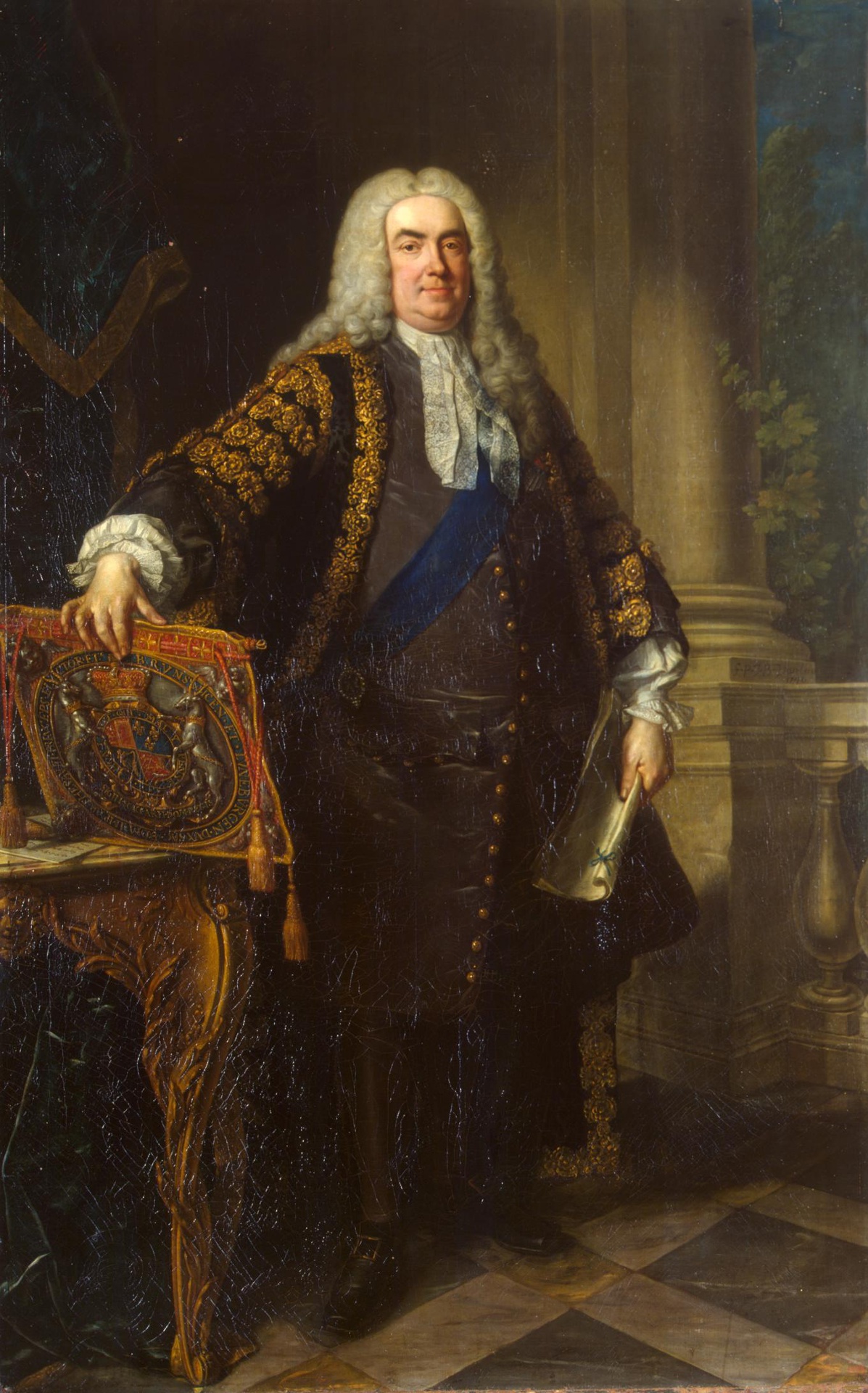
Walpole: First among P.M.'s, but only 14th in his family!

G'day, reading mates! I am currently "down under" the Equator, researching something very important called "the bush." But more on that later.

In commemoration of this week's general elections in Great Britain, I fancied that I would bring my readers some strange and interesting facts from the Cabinet about the men (and woman) who have held the post of Prime Minister.

The first prime minister, Sir Robert Walpole (1676-1745; served 1721-42), had sixteen brother and sisters, the most of any Prime Minister. And his family wasn't even Catholic -- just secret Swedenborgians!

The youngest P.M. ever, the appropriately-named William "
L'Enfant Terrible" Pitt,  (1759-1806; served 1783-1801, 1804-06) was one of the first trainspotters in Britain, personally bankrolling Richard Trevithick's experimental locomotive The Rotten Borough in 1804! 


The ill-fated steam locomotive The Rotten Borough, demonstrated at a "steam circus" in (pre-Woolfian) Bloomsbury, London. The track layout, though quite a profitable spectacle, proved, to the great surprise of Pitt and other investors, completely useless for passenger or freight travel.  

In commemoration of his tenure as prime minister, in 1945, Topps Commonwealth issued a special set of bubble-gum cards called "Stars of Downing Street" starring Winston Churchill (Conservative, 1874-1965, served 1940-45; 1951-55)!


Limited-edition autographed "Brotherhood of Living P.M's" card from the 1945 Topps set "Stars of Downing Street". From left, Clement Atlee, David Lloyd George, Churchill, Stanley Baldwin, and the reanimated body of Neville Chamberlain (seated).

As you might have guessed from the above, one of my interesting facts is that the British government reanimated the body of Neville Chamberlain (Conservative, 1869-1940, 1945-????, served 1937-40), who, during his first life, invented the popular billiard-like game of snooker!

Scotsman Ramsey MacDonald (Labour, 1866-1937, served 1924, 1929-35) was, during his interregnum, reduced to the life of a common Glaswegian tramp!


MacDonald in 1927, hoping, as he said in an interview with the Daily Mail, to "hop a steamer to Brazil" and "make it big" there.


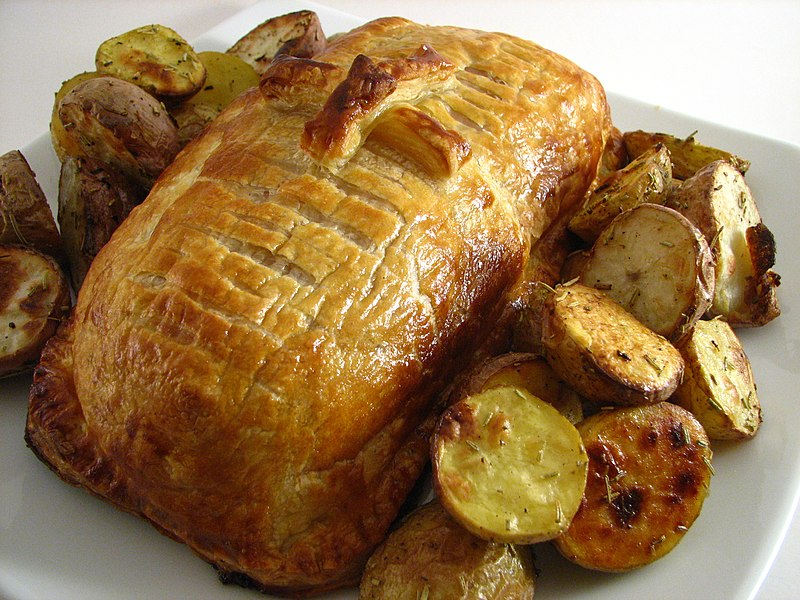
In 1834, William IV accidentally appointed a loaf of Beef Wellington (Conservative, November 13-December 10, 1834, served Nov. 14-Dec. 10, 1834) Prime Minister, and it served for almost a month before anyone noticed (or ate) it!


Mistaken for Arthur Wellesley (1769-1852) by the "Sailor King".

Benjamin Disraeli (Conservative, 1804-81, served 1868, 1874-80) kept a lion, given to Queen Victoria as a gift by African entrepreneur Cecil Rhodes, as a guard-dog at 10 Downing Street -- and called the lion Prince Albert!


Disraeli with Prince Albert (at the family "dry goods" store, John Bull's Mercantile and Novel-supply) trying to sink the Bismark!

William Gladstone (Liberal, 1809-98, served 1868-74, 1880-85, 1886, 1892-94, 1895-1895, 1898-1911) secretly owned a corn plantation, Hawardan, with fellow P.M. Sir Robert Peel on the Isle of Man, ostensibly under the stewardship of the Manx liege lords the Stanley Family (led by the 14th Earl of Derby, Edward Smith-Stanley, thrice P.M. himself), which used imported Black Irish slave labour! Is coincidental intersection of the British aristocracy even possible?!


Bathed in the golden light of a Manx midsummer afternoon, Gladstone (center) and Peel (far right) meet with three of their estate overseers on the pastoral grounds of their corn plantation, 1897.  

Although two feet shorter than his subject, John Russell, the Earl Russell (Whig-Liberal, 1792-1878, served 1846-52, 1865-66) moonlighted as an Abraham Lincoln impersonator whilst Prime Minister, delivering comic orations of the Gettysburg Address to rapt British audiences (an act his grandson, the philosopher Bertrand Russell, later condemned as an act of supreme illogic), until his second career was discovered and he was recalled by the House of Commons!


Russell in costume, backstage at the 1865 Royal Albert Hall Christmas Charity Concert.

The popular tea blend Earl Grey was named after the eponymous prime minister (Whig, 1764-1845, served 1830-34), who, when in the Far East investigating the actions of East India Company official Warren Hastings, was given some of the tea by a grateful Chinese man that he had saved from drowning in the silty waters of the Yellow River only a few hours earlier!


Earl Grey tea-flavored chocolate confection briefly sold in the Far East during the First Opium War. (I'm not making this one up! Check the Kanji!)

And, last but not least....

Current (not for long?) P.M. James Gordon Brown (Labour, 1951-2010?, served 2007-?) is actually a Doctor of History, but was forced to close his Edinburgh practice after being appointed the menacing-sounding Shadow Chancellor of the Exchequer in 1992! Now I wish I would have voted Labour instead of for the No Candidate Deserves My Vote! Party.

Also, did you know its called a "Hanged Parliament" because, the day after the election, the monarch personally hangs the current P.M. in the Commons chamber? Could it really happen?!?


Everyone loves a hanging!

24 April 2010

Ouroboros Eins


Figure A: Responsible for the fall of Rome?
64th-degree Warden Edward Gibbon secretly thought so!

Good eve, loyal readers. Tonight I tell you of the creature called
Ouroboros, the serpent eating its own tail, also known as the World Serpent, or Jörmungandr. It is a strange history, fraught with mystical intrigues and uncertain prefixes. And maybe a three-way Ragnarök between the Psychologists, Freemasons, and Theosophists for fate of humanity (or at least they thought so).

Disclaimer: This tale involves a lot of inimitable and intimidating German compound jargon words (Deutschezusammengesetztefachsprachewörter) and a fair smattering of umlauts -- may the Prospektivenleser beware!


Figure B: Thor's giant holographic proxy fights his serpentine cousin, Jörmungandr, in rehearsals for the 3 p.m. matinée of Götterdämmerung

Our story begins, as most stories do, in the past -- the very ancient past. The faith of the old Norse peoples included a pantheon of gods, giants, and divers other spirits. Among these was Jörmungandr, offspring of the trickster-god Loki. A snake, little Jörgy grew and grew and grew until he was so big he encircled the whole of Midgard (Earth), with his tail in his mouth.

It is said that that the sky-god and amateur carpenter Thor had three encounters with the World Serpent. An infamous cat burglar, Thor tried to steal his giant-pal Útgarða-Loki's feline friend, only to discover it practically impossible to lift because it was, in fact, Jörmungandr in a catsuit! Once, Thor went on a fishing trip with another giant-friend, and with one of his hand-tied flies caught the World Serpent, but his yellow friend cut the line before he could strike it a fatal blow with his hammer. Now that's a fish story! The final meeting between god and snake will take place at Ragnarök, the end of the world, when Jörmungandr will leave his comfortable Outer Sea to poison the sky, summoned by sky-hater king of the Frost Giants Richard Wagner. Thor will battle the serpent, killing him but dying himself after walking nine paces from the snake's overpowering leitmotif.


Figure C: Guido Cagnacci, "Allegoria della Vita Umana,"
17th century, tastefully censored for young readers

The Ouroboros did not only appear in Norse culture, however. Chinese, Hindu, Greek, Atlantean and Amerindian cultures also had representations of the circular serpent in their literature and art. To many, it represented the cyclical nature of life and the continuity of the world. The Celts just thought they made great earrings.

That great pagan apologist and peritonitist Edward Gibbon, in his great 1776 work The History of the Decline and the Fall of the Roman Empire (later made into a polemic documentary film starring the late Gibbon apologist Sir Alec Guiness) blames the Ouroboros for Rome's decline. He believed that Romans had lost their civic virtue, becoming effeminate and unwilling to live a "manly" lifestyle. They became Christian and abandoned the old pagan customs, looking to the afterlife rather than the present. And, in addition to barbarians, the Empire was regularly attacked by their Gothic allies: giant, angry serpents, not unlike the one responsible for the death of St. Francis Xavier.


But the wick on my candle has almost reached its nadir. Time to close the Cabinet until next time, when I will continue the Saga of the Ouroboros.


Figure D: Fifth-century Roman soldiers being attacked by enraged, Christian-hating serpents, in a woodcut from Decline and Fall: Illustrated Edition (1777)

14 April 2010

Publick Occurrences: America's First Newspaper


Wilkommen am Wunderkammer! As an aficionado of dying media, I thought I would bring you, in this edition of the Cabinet, the tale of that first American penny dreadful, Publick Occurrences both Forreign and Domestick. Struck up in that late, great lazy newspaper town of Boston by an English expatriate named Benjamin Harris in 1690, Occurrences was the first printed news chronicle to circulate this side of the pond. Harris' day job was as the proprietor of the London Coffee-House in Boston, a place where Anglophiles could gather and gossip in affected British accents.

Plate 1.1: Harris poses with "printer'ſ beſt Friend" in an advertisement for Occurrences

Harris began his gazette with some semi-accurate and prophetic words:"The Countrey shall be furnished once a moneth...with an Account of such considerable things as have arrived unto our Notice." As you can see, spelling has not always been a priority in the news industry. Leaving his business open to expansion, Harris included the caveat that he would have no qualms about flooding his readership with news, as he could not keep a "Glut of Occurrences" from his loyal subscribers.

Harris' goal, he said, was to make sure that "Memorable Occurrents of Divine Providence may not be neglected or forgotten, as they too often are," referring to the infamously illiterate and forgetful lotus-eating Puritans of New England. Another of Harris' objectives was to use his printed organ as a kind of mind control, directing his readers to "better understand the Circumstances of Publique Affairs" in order to "direct their Thoughts at all times." To what ends Harris intended to use his power, be it for zombie revolution or personal vanity, is unknown.

The third goal of Occurrences was "that some thing may be done towards the Curing, or at least the Charming, of that Spirit of Lying, which prevails amongst us." Harris perhaps intended to cure, or at least address, the supposedly supernatural devilry most saliently expressed in the 1689 Braintree Liar Trials. (The lie? The town was actually called Quincy! The real truth? Braintree was controlled by a malevolent, sentient Liberty Tree.) Harris furthermore made his intentions known that he would "expose the Name of such person, as A malicious Raiser of a false Report," and would serve justice by personally pressing them to death in his workshop.


Plate 1.2: Illustration of the fate of "Malicious Raisers of False Reports" appearing in Occurrences

As no newspaper had ever been published in the British colonies of North America, Harris had the daunting task of condensing eighty-three years of news into three double-columned pages. Luckily, he hit upon an ingenious idea to remedy this problem -- make the back page of the second sheet blank. Then the reader could fill in, using their own printing press, what they deemed Harris had neglected. Who's the clever one now, Sulzberger and your "grey" lady?


True to his word, Harris included a diverse array of stories from north, east, west, and south. He reported that "Epidemical Fevers and Agues grow very common, in some parts of the Country," and "tho' many dye not" they were "sorely unfitted for their impolyments." New England society seems to have recovered quickly, though, from its temporary dearth of colored clothing.


Although it was probably apparent to most of his subscribers, Harris also reported that Boston had, “a few weeks ago…met with a Disaster by Fire, which consumed about twenty Houses.” More importantly, however, one of the “Calamities of this Fire” was that the “best furnished PRINTING-PRESS, of those few that we know of in America, was lost; a loss not presently to be repaired.” Any good investigative journalist today would regard this story with suspicion, and might ask: “Did Harris forcibly enter into the Shop of a rival printer, ABSCOND with his PRINTING-PRESS and then ſet the ſhop ablaze to cover up his crime?” Luckily for Harris, investigative reporters had not been invented yet. Unfortunately, Cotton Mathers had been invented, as we shall see presently…


After recounting that, while “barbarous Indians were lurking about” in Chelmsford, “Christianized Indians” had the “prospect of a very Comfortable Harvest," Harris ended the issue with another disclaimer: “'Tis possible, we have not so exactly related the Circumstances of this business, but this Account, is as near exactness, as any that could be had.” Harris needn't worry -- there was no challenge to the veracity of Harris' stories from the other newspaper publishers of Boston. AND THERE WOULD BE NO Publick Occurrences No. 2!


Plate 1.3: Cotton "3.0" Mather sternly reprimands a "barbarous Newsie" it encounters on the road to Salem trying to illegally sell Occurrences out of her handwoven basket.

As you might have expected the humorless and functionally-illiterate Puritan leaders of Massachusetts did not like Harris' unlicensed beige journalism. Foremost among them was Cotton Mather, a great tree-killer in his own right. The prototype Mather 3G,  was engineered to be the ultimate arbiter of Puritan law. The third incarnation was a great improvement on its predecessors, the Richard 1000 and the Increase-a-tron 2.0, cranking out wordy yet inexplicably popular sermons faster than he could inject parishioners with smallpox. The Mather did not stand for illegal printing, however, or upstart competition, and so Harris' two printing presses were smashed by enthusiastic Luddites.

Benjamin Harris, disgraced and bankrupt from his failed Berkshires coffee plantation, did what he knew he must do someday, activating the teleportation portal that linked the London Coffee-House back to its metropolitan namesake. Harris was never seen in Boston again, but, fourteen years later, a man named John Campbell purchased the now-decrepit building and discovered an old printing press inside, and the Boston News-Letter, the first continuouſly printed newspaper in North America, was born!

Well, readers fair, this edition of the Cabinet has drawn to a close. But ol' Prof. C has learned at least one lesson from his research into early American newspapers!

Please fill in below any witticisms, pseudofacts, or interesting woodcuts that you feel add to my tale. Printing only, please.


________________________________
Related Posts Plugin for WordPress, Blogger...